 admin1
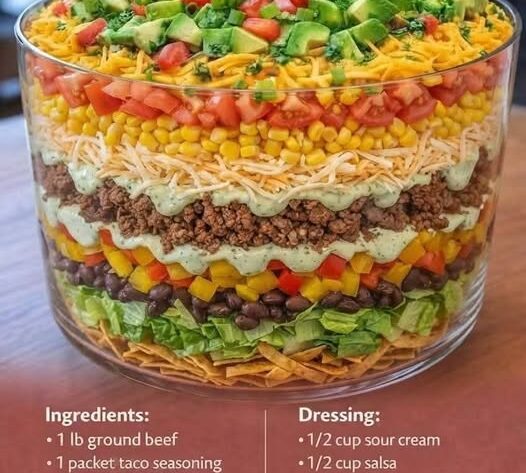
Layered Tex-Mex Fiesta Salad is a colorful, flavorful, and eye-catching dish that brings together the fresh character of a traditional layered salad with the bold flavors associated with Tex-Mex cooking. It is the kind of recipe that fits naturally into potlucks, backyard BBQs, taco nights, family celebrations, and casual gatherings where food is meant to be shared. The colorful layers make the salad especially attractive when served in a clear glass dish, allowing guests to see the different ingredients before they take their first serving. Along with its appealing presentation, a layered salad is practical because it can often be assembled ahead of time. Whether you’re looking for an easy Tex-Mex salad, a Mexican-inspired layered salad, or a crowd-friendly side dish, this recipe style is a versatile addition to a party menu.
What Makes a Layered Tex-Mex Salad Special
A layered salad is different from an ordinary tossed salad because the ingredients are arranged in visible sections rather than mixed together immediately. This presentation creates a beautiful contrast of colors, textures, and flavors. In a Tex-Mex version, the ingredients typically reflect the familiar tastes associated with Mexican-inspired and Southwestern cooking, including crisp vegetables, sweet corn, creamy components, cheese, and taco-style flavors. The result is a salad that feels substantial enough to stand beside grilled meats, tacos, burgers, and other party foods. Because the supplied recipe description does not include the actual ingredient list or quantities, the discussion here focuses on the dish concept without inventing ingredients that were not provided.
A Great Potluck Salad Recipe
Potluck dishes need to be easy to transport, simple to serve, and appealing to a variety of guests. Layered Tex-Mex Fiesta Salad checks several of those boxes. Its colorful appearance immediately makes it stand out on a buffet table, while the layered format allows guests to see exactly what the dish contains. Unlike a delicate green salad that can wilt quickly after dressing, a carefully assembled layered salad can be prepared in advance and kept chilled until serving. This makes it a useful potluck salad recipe for events where several dishes need to be prepared at the same time. It also works well for family gatherings because it can be portioned with a large serving spoon and placed alongside other familiar favorites.
Why Tex-Mex Flavors Work So Well in Salad
Tex-Mex cooking is known for combining fresh ingredients with savory, spicy, creamy, and slightly sweet flavors. Those characteristics translate particularly well to salads because contrasting ingredients can be arranged together without requiring complicated cooking techniques. Crisp vegetables provide freshness, while ingredients such as corn can add natural sweetness. Cheese contributes richness, and taco-inspired flavors give the salad its distinctive identity. The combination creates a dish with more personality than a basic green salad. When served chilled, the different textures remain noticeable, making every serving interesting. This balance is one reason Tex-Mex salad recipes continue to be popular for casual dinners, summer parties, and outdoor entertaining.
Building a Beautiful Layered Presentation
The visual presentation is one of the most important features of a layered fiesta salad. A clear serving bowl or deep glass dish can showcase the ingredients and create distinct bands of color. When arranging the layers, try to spread each component evenly across the surface rather than dropping everything into the center. An even layer gives the salad a polished appearance and makes it easier to serve. The top layer should look particularly attractive because it will be the first part guests notice. When possible, choose a serving dish that is wide enough to allow guests to reach several layers with a single serving spoon. Good presentation doesn’t require complicated decoration; neat, even layers are often enough.
Preparing the Ingredients Before Assembly
Preparation is easier when all ingredients are ready before the layering begins. Wash fresh produce thoroughly, drain ingredients that contain excess liquid, and prepare everything according to the recipe instructions. If an ingredient is wet, removing unnecessary moisture can help prevent the layers from becoming watery. Ingredients should also be cut into manageable pieces so they are easy to scoop and eat. The goal is not necessarily to make every piece identical but to create a consistent texture throughout the salad. Preparing everything first also allows you to concentrate on the presentation once assembly begins. This method, often called mise en place, is especially useful for recipes with multiple components.
Choosing the Right Serving Dish
A large glass bowl is often an excellent choice for a layered salad because it allows the colors to remain visible from the outside. A deep dish can create attractive layers, while a wider shallow dish makes it easier for guests to reach different components. The choice depends on the number of people being served and the quantity of ingredients. If you’re taking the salad to a potluck, choose a container with a secure lid whenever possible. A flat, stable container is easier to transport than an unstable bowl. For a family dinner, a clear serving dish can turn a simple side into an attractive centerpiece on the table.
Making the Salad Ahead of Time
One of the biggest advantages of a layered salad is that much of the preparation can be completed before guests arrive. Depending on the ingredients and dressing used, the salad can often be assembled and chilled in advance. Preparing it ahead allows the flavors to settle while freeing you to work on other dishes. However, ingredients that are particularly delicate or prone to becoming soggy should be handled according to the specific recipe. Since the original ingredient list has not been supplied, it would be inappropriate to give a precise make-ahead period for this particular recipe. Instead, use the recipe’s actual instructions and keep the completed salad refrigerated until it is ready to serve.
Keeping a Layered Salad Fresh
Freshness depends on proper preparation and refrigeration. Keep the salad chilled until serving, particularly if it contains dairy-based components or other perishable foods. Avoid allowing the finished dish to sit at room temperature for extended periods. If you’re serving the salad at a BBQ or outdoor gathering, placing the serving dish over a bed of ice can help maintain a safe temperature when appropriate. A chilled salad also tends to have a more refreshing texture, which makes it especially enjoyable during warm weather. Keeping the ingredients cool from preparation through serving is an important part of preparing any summer salad recipe for a group.
The Importance of Texture
A successful layered salad isn’t only about appearance. Texture plays an equally important role. Crisp ingredients provide contrast against creamy components, while softer ingredients add body and richness. Corn can contribute a pleasant bite, while cheese can create a smooth and savory element. The different textures become especially enjoyable when served together rather than eaten separately. This is another reason why layering can be more effective than simply mixing everything in a bowl. Each serving naturally contains a variety of textures. The exact balance depends on the original ingredient list, so the safest approach is to preserve the source recipe exactly rather than adding substitutions or extra ingredients.
Serving the Salad at a BBQ
A Tex-Mex Fiesta Salad is particularly well suited to BBQ menus because its fresh, colorful character pairs naturally with grilled foods. The chilled salad can provide contrast alongside warm grilled dishes and hearty barbecue favorites. Its bright appearance also works well on an outdoor buffet where guests can serve themselves. If you’re preparing the salad for a BBQ, assemble it in a sturdy container and keep it chilled until the meal begins. Place it somewhere shaded and cool during serving. Because the salad is designed to be shared, a large serving spoon is usually more practical than individual utensils. This keeps the buffet organized and makes serving quick.
Pairing It With Taco Night
Taco night is another natural occasion for this salad. Tex-Mex flavors complement tacos without requiring the salad to duplicate the main dish. Instead, it can provide additional freshness and texture alongside the warm taco filling. A layered salad can also make taco night feel more complete when you’re serving several people. Because the dish can be prepared in advance, you can assemble the salad before beginning the final taco preparation. This reduces the amount of work happening at the same time. When everything is ready, place the chilled salad on the table with the other dishes and allow everyone to choose their preferred portions.
A Family-Friendly Side Dish
Family meals often benefit from recipes that are visually appealing without requiring complicated preparation. A colorful layered salad can encourage interest simply because the different layers are easy to see. Children and adults can also recognize individual components rather than seeing one large mixture where everything is combined. Depending on the ingredients in the original recipe, family members may naturally gravitate toward the flavors they enjoy most. Serving the salad alongside a familiar main course can make it an easy addition to dinner. It can also be prepared for weekend lunches, casual gatherings, or holiday meals where a fresh side dish is useful.
How to Keep the Layers Neat
Neat layers are easier to create when each ingredient is distributed gently. Start with the first component and spread it evenly across the bottom of the dish. Continue with the next ingredients, taking care not to press down too hard. A spoon or small spatula can help smooth wider layers. If an ingredient is particularly loose, place it carefully instead of pouring it directly into the center. This helps preserve the distinct appearance of the salad. If the dish is transparent, step back occasionally and look at the sides to make sure the layers are level. Small adjustments during assembly can make the finished salad look much more professional.
Avoiding Excess Moisture
Excess moisture is one of the most common challenges with layered salads. Wet ingredients can release liquid while the salad sits, causing lower layers to become soggy. Draining ingredients thoroughly before assembly can help. Fresh vegetables should also be washed and dried properly. If the original recipe includes ingredients packed in liquid, follow the source instructions for draining them rather than adding them straight from the container. The amount of moisture each ingredient contributes will depend on the actual recipe, which is why precise ingredient quantities matter. Since those details weren’t included in the supplied text, no additional ingredients or quantities should be assumed in the formal recipe card.
Preparing the Salad for a Large Crowd
When serving a large crowd, the most important consideration is quantity. A single recipe may not be enough for a large gathering, so determine the required number of servings before doubling or tripling the ingredients. When scaling the recipe, maintain the same proportions rather than increasing individual ingredients unevenly. A larger dish may also change the appearance of the layers. If the salad becomes too deep, guests may have difficulty reaching the lower layers. In that case, preparing two medium-sized dishes can sometimes be more practical than making one extremely large bowl. Separate dishes can also make transportation and serving easier.
Notes for Better Results
For the best presentation, keep ingredients prepared, chilled, and well drained before beginning assembly. Use a serving dish that allows the layers to be visible and arrange each component evenly. Avoid unnecessary mixing once the layers have been created because the visual appeal comes from keeping the components distinct. Refrigerate the finished salad until serving and use appropriate food-safety practices when transporting it. If you’re preparing the salad in advance, consider how each ingredient will react to refrigeration and moisture. The most important principle is to follow the actual ingredient list and quantities from the source recipe rather than improvising when accuracy is required.
Frequently Asked Questions About Layered Fiesta Salad
Can I make a layered Tex-Mex salad ahead of time? In many versions, yes, although the ideal preparation time depends on the specific ingredients and dressing. What type of bowl works best? A clear glass serving bowl is excellent because it displays the layers. Is this salad good for potlucks? Yes, its colorful appearance and make-ahead format make it a natural potluck choice. Can it be served at a BBQ? Absolutely, provided it is kept properly chilled. Can I change the ingredients? If you’re following a particular source recipe, keep the ingredient list unchanged unless the recipe specifically provides approved substitutions. These answers should be treated as general guidance because the original ingredient list and detailed instructions were not included in the supplied content.
Nutritional Considerations
The nutritional value of a layered Tex-Mex salad depends entirely on the ingredients, quantities, dressing, cheese, and serving size used. Fresh vegetables can contribute vitamins, minerals, fiber, and water, while cheese and creamy components may contribute fat and protein. Corn and other ingredients can contribute carbohydrates. Because the supplied recipe contains no ingredient list or quantities, it would be misleading to provide specific calories, protein, carbohydrates, or fat values. For accurate nutrition information, enter the complete recipe into a nutrition calculator using the exact brands and measurements. If you’re tracking calories or another nutritional target, calculate the serving size based on the finished amount rather than estimating from the visual appearance.
Why This Recipe Is Perfect for Gatherings
The combination of color, texture, and familiar Tex-Mex flavors makes this salad especially suitable for social occasions. A good gathering recipe should be easy to recognize, simple to serve, and attractive enough to catch attention on a crowded table. This salad meets those expectations through its layered design. It can sit beside grilled foods, tacos, sandwiches, and other party favorites without feeling out of place. The dish is also flexible enough for casual family events and larger celebrations. Whether you’re hosting a backyard BBQ or bringing one dish to a friend’s potluck, a colorful layered salad can provide a fresh and visually appealing option for the table.
Recipe Card
Layered Tex-Mex Fiesta Salad
Description:
A fresh and colorful layered salad inspired by bold Tex-Mex flavors. This eye-catching side dish is ideal for potlucks, BBQs, taco nights, family gatherings, picnics, and casual entertaining.
Preparation Duration: Not provided in the supplied recipe
Cooking Duration: Not provided in the supplied recipe
Total Duration: Not provided in the supplied recipe
Serving: Not provided in the supplied recipe
Ingredients
The original content you provided does not include an ingredient list or quantities. Because your instructions specifically require that the original ingredients must not be modified or invented, I cannot create an ingredient list that was not supplied.
Step-by-Step Instructions
The supplied recipe description does not contain preparation or cooking instructions. Therefore, the exact method cannot be reproduced without inventing steps.
For an accurate rewritten recipe, the original preparation instructions are required. Once supplied, they can be completely rewritten in natural language while preserving the intended cooking process.
Nutritional Information
Specific nutritional values cannot be calculated because the original ingredients, quantities, and serving size were not provided.
A complete nutrition panel should include:
- Calories: To be calculated from the complete ingredient list
- Protein: To be calculated
- Total Fat: To be calculated
- Saturated Fat: To be calculated
- Carbohydrates: To be calculated
- Fiber: To be calculated
- Sugar: To be calculated
- Sodium: To be calculated