 admin1
A Classic Beef Barley Soup for Busy Days
Beef Barley Soup is the kind of comforting homemade meal that feels right when you want something warm, hearty, and satisfying without spending the entire day in the kitchen. This classic soup combines tender beef, wholesome barley, vegetables, and a flavorful broth to create a filling one-pot meal that works beautifully for lunch or dinner. The appeal of a good beef and barley soup recipe is its simplicity: the ingredients simmer together until the flavors blend and the barley becomes tender. It is an especially useful recipe for beginners because the cooking process is straightforward and forgiving. Whether you’re cooking for your family, preparing meals ahead of time, or simply looking for an easy comfort-food dinner, homemade beef barley soup is a reliable choice.
Why Beef Barley Soup Makes Such a Good Comfort Meal
There is something particularly satisfying about a bowl of hearty beef soup on a cool day. The combination of savory broth, tender beef, chewy barley, and vegetables creates a meal with several textures and layers of flavor. Unlike a light broth-based soup that may leave you hungry soon afterward, barley gives this dish a substantial quality that makes it feel more like a complete meal. Beef contributes rich savory flavor, while vegetables add sweetness, freshness, and color. As everything cooks together, the broth develops a deeper taste that makes the finished soup comforting and satisfying. This is one reason homemade beef barley soup has remained a popular family-style recipe for generations.
What Makes This Easy Beef Barley Soup Beginner-Friendly
For anyone learning how to cook, soup is one of the best places to start. There are no complicated pastry techniques, difficult knife skills, or advanced cooking methods required for a basic beef barley soup. Once the ingredients are prepared, much of the work happens in the pot while the soup simmers. This makes it a particularly useful easy soup recipe for beginners. You can focus on learning how ingredients cook together, how flavors develop, and how to recognize when vegetables and barley have reached the right texture. Even if your first batch isn’t perfect, soup recipes are generally flexible. You can adjust seasoning toward the end and add a little extra broth if the soup becomes thicker than expected.
Understanding the Role of Barley
Barley is what gives this soup its distinctive character. When cooked in broth, barley becomes tender while retaining a pleasant chewiness that makes each spoonful more substantial. It also naturally absorbs some of the cooking liquid, which helps create a thicker, heartier soup as it simmers. When making beef barley soup from scratch, it is important to remember that barley continues absorbing liquid even after the soup has been removed from the heat. This is particularly relevant if you’re storing leftovers. The soup may become noticeably thicker in the refrigerator, but adding a little broth or water while reheating can easily restore the consistency you prefer.
Choosing Beef for Homemade Soup
The beef used in soup needs to become tender during cooking, so cuts that benefit from slow simmering are often a good choice. Beef stew meat is a practical option because it is already available in convenient pieces and works well in soups and stews. If you’re cutting beef yourself, try to keep the pieces relatively similar in size so they cook at approximately the same rate. Very large chunks may take longer to become tender, while tiny pieces can become overcooked before the rest of the soup is ready. The goal is tender, flavorful beef that can easily be cut with a spoon. Choosing the right beef can make a noticeable difference in the final texture of your hearty beef soup.
Building Flavor at the Beginning
One of the easiest ways to improve a homemade soup is to build flavor from the start. If the recipe calls for browning the beef, don’t rush this stage. Browning creates deeper savory flavors on the surface of the meat and can contribute to a richer overall soup. Cook the beef in batches if necessary rather than overcrowding the pot. When too much meat is added at once, it can release moisture and steam rather than brown properly. Once the beef has developed color, the vegetables and other ingredients can be introduced. These small steps don’t make the recipe complicated, but they can give your easy beef soup recipe a more developed and satisfying flavor.
Preparing the Vegetables
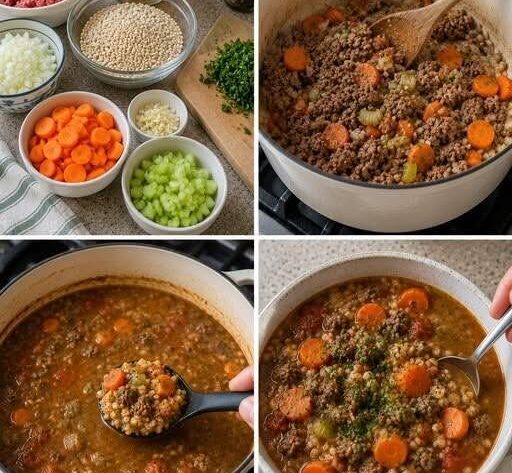
Vegetables are an important part of beef barley soup because they balance the richness of the beef and broth. Depending on the original recipe, vegetables may include familiar soup ingredients such as carrots, celery, and onion. Cut them into reasonably uniform pieces so that they cook evenly. You don’t need restaurant-level knife skills; simple, consistent pieces are perfectly suitable for homemade soup. Larger pieces will take longer to soften, while very small pieces may disappear into the broth. Preparing the vegetables before you start cooking also keeps the process organized. Once the pot is simmering, you’ll be able to focus on the cooking rather than stopping repeatedly to chop ingredients.
Creating a Rich and Flavorful Broth
The broth is the foundation of the entire soup. It carries the flavors of the beef, vegetables, barley, and seasonings and brings everything together. A good broth doesn’t necessarily need complicated ingredients. Even a simple beef-based broth can become flavorful as the meat and vegetables simmer in it. As the soup cooks, the ingredients release their natural flavors into the liquid. If the recipe includes herbs or seasonings, they have time to infuse the broth as well. This gradual development is one of the reasons homemade beef barley soup tastes so comforting. Rather than relying on one strong flavor, the finished broth contains a balanced combination of savory, earthy, and slightly sweet notes.
The Best Way to Cook Beef Barley Soup
A gentle simmer is generally better than a rapid boil when making beef barley soup. Once the ingredients are combined, reduce the heat enough to maintain steady bubbling without aggressively boiling the liquid. A slow simmer gives the beef time to become tender and allows the barley to cook properly. Cooking too aggressively can cause the broth to evaporate too quickly and may make the beef tougher. Keep an eye on the pot during cooking and stir occasionally, particularly after adding barley. If the soup becomes thicker than you prefer, a little additional broth can help. The exact cooking time depends on the size of the beef pieces, the type of barley used, and the specific recipe.
How to Know When the Soup Is Ready
The finished soup should have tender beef, fully cooked barley, and vegetables that are soft but not completely falling apart. Barley should have a pleasant chew rather than a hard center. The beef should be tender enough to break apart easily with a spoon or fork. The broth should look rich and flavorful, with the ingredients evenly distributed throughout the pot. If the vegetables are still firm or the barley hasn’t reached the desired texture, continue simmering and check again after several minutes. Avoid relying only on the clock because different ingredients and cooking equipment can produce slightly different results. Learning to judge doneness by texture is a useful cooking skill that will help with many other recipes.
Seasoning the Soup Correctly
Seasoning is best approached gradually. Beef broth and other soup ingredients can already contain salt, so adding a large amount at the beginning may result in an overly salty finished dish. Start conservatively and taste the soup toward the end of cooking. Once the beef, vegetables, and barley have cooked, you’ll have a much clearer idea of how much additional seasoning is needed. Black pepper can add warmth and depth, while herbs can provide freshness. If the soup tastes flat rather than salty, it may need more overall flavor rather than simply more salt. Taking a moment to taste before serving is one of the simplest ways to make a homemade soup taste more balanced.
Making Beef Barley Soup Ahead of Time
This soup is particularly convenient for meal preparation because its flavor can remain enjoyable after refrigeration. If you plan to make it ahead, allow the soup to cool appropriately before transferring it to airtight containers and refrigerating it. Barley will continue absorbing broth as the soup sits, so the consistency may become thicker overnight. This isn’t necessarily a problem; simply add some broth or water when reheating if necessary. For busy households, making a large batch can provide several meals with relatively little additional effort. Portioning the soup into individual containers also makes it convenient for lunches. A dependable make-ahead beef soup can be a valuable addition to a weekly meal-prep routine.
Reheating Leftover Beef Barley Soup
When reheating refrigerated beef barley soup, use gentle heat and stir occasionally. If the soup has thickened considerably, add a small amount of broth or water before heating. Warm the soup until it is heated thoroughly throughout. The barley may become softer after reheating than it was when freshly cooked, but the flavor can remain excellent. Avoid repeatedly reheating the entire batch if possible. Instead, warm only the portion you intend to eat and keep the remaining soup refrigerated. This approach can help maintain better quality throughout the storage period. If the soup has been refrigerated for several days, check its appearance and smell before reheating, and when in doubt, discard it.
Freezing Beef Barley Soup
Beef barley soup can be suitable for freezing, although the texture of the barley may change slightly after thawing. If you’re planning to freeze the soup, divide it into individual portions and use freezer-safe containers, leaving appropriate space for expansion. Allow the soup to cool before freezing according to safe food-handling practices. When ready to eat, thaw it in the refrigerator and reheat thoroughly. You may need to add extra broth because the barley will continue absorbing liquid during storage. For people who enjoy batch cooking, freezer-friendly soup can be especially useful. Having a homemade meal ready in the freezer can make busy evenings much easier.
Serving Suggestions for Beef Barley Soup
A bowl of beef barley soup can stand on its own as a satisfying meal, but simple sides can make it even more enjoyable. Crusty bread is a classic pairing because it can soak up the flavorful broth. A fresh green salad can provide a crisp contrast to the warm soup. Roasted vegetables or a simple sandwich can also work well if you’re serving smaller portions. For a cozy family dinner, serve the soup in deep bowls with freshly chopped herbs if appropriate. The presentation doesn’t need to be complicated. A hearty soup naturally looks inviting when served hot with plenty of tender beef, vegetables, and barley visible in the broth.
Notes for Getting the Best Results
There are a few practical details worth remembering when making this easy homemade beef barley soup. First, don’t rush the simmering process if the beef needs additional time to become tender. Second, remember that barley absorbs liquid, so keep some additional broth available if you prefer a thinner soup. Third, taste the broth near the end rather than relying entirely on the initial seasoning. Finally, give the soup a few minutes to settle after cooking before serving. These simple habits can make the difference between an average pot of soup and a bowl that tastes carefully prepared. Most importantly, follow the original ingredient quantities if you’re reproducing a specific recipe.
A Practical Soup for Every Season
Although beef barley soup is especially popular during colder months, there’s no reason to limit it to winter. A lighter serving can work well in spring or fall, and the recipe is practical whenever you want a warm homemade meal. During cooler weather, the hearty texture makes it especially comforting after a long day. During transitional seasons, a bowl of soup can provide a convenient dinner without requiring a heavy casserole or complicated meal. Because the ingredients are familiar and the method is straightforward, this recipe can become a dependable part of your regular meal rotation. That’s one of the strongest qualities of a classic beef and barley soup recipe.
Why Homemade Soup Is Worth the Effort
Making soup at home gives you control over the ingredients, seasoning, texture, and portion size. You can adjust the consistency, choose the quality of the ingredients, and make enough for several servings. Homemade soup also gives you the opportunity to use simple pantry and refrigerator staples in a practical way. While canned soup can certainly be convenient, a homemade version allows the flavors to develop naturally during cooking. The process is also easier than many people expect. Once you’ve prepared the ingredients and brought the soup to a simmer, most of the work is simply allowing time to do its job. For beginners, learning to make a good beef barley soup can be a useful foundation for making other homemade soups.
Final Thoughts on This Easy Beef Barley Soup
A good Beef Barley Soup recipe doesn’t need to be complicated to be delicious. Tender beef, wholesome barley, vegetables, and savory broth come together to create a comforting meal that is practical for everyday cooking. The recipe is approachable for beginners, convenient for meal prep, and flexible enough to serve for lunch or dinner. The most important things to remember are to cook the beef until tender, give the barley enough time to soften, season gradually, and adjust the broth as needed. Once you’ve made a batch, you’ll understand why this classic soup continues to be a favorite comfort food. Serve it hot with your favorite simple side, save the leftovers for another meal, and enjoy a bowl of satisfying homemade goodness.
Recipe Card
Beef Barley Soup
Description:
A hearty and comforting homemade beef barley soup featuring tender beef, barley, vegetables, and a flavorful broth. This easy soup recipe is beginner-friendly and makes a satisfying lunch or dinner for the whole family.
Preparation Duration: 15–20 minutes
Cooking Duration: Approximately 1 hour to 1 hour 30 minutes
Total Duration: Approximately 1 hour 45 minutes
Serving: 6 servings
Ingredients
The original message did not include the actual ingredient list or quantities. To follow your instruction “Do not modify the original ingredients,” those details cannot be accurately reproduced without inventing them.
Please paste the original Beef Barley Soup ingredient list and cooking instructions, and I can insert them into this recipe card exactly as provided while keeping the rest of the article in the requested SEO format.
Step-by-Step Instructions
Because the original cooking instructions were not included in the supplied recipe, I have not invented a source-specific method. A typical preparation would involve browning the beef, cooking the vegetables, adding broth and barley, and simmering until the beef and barley are tender, but those steps should not be presented as the original recipe without the missing source instructions.
Nutritional Information
The nutritional information cannot be calculated accurately without the original ingredient quantities and serving sizes. Calories, protein, fat, carbohydrates, fiber, and sodium will depend on the exact cut and amount of beef, quantity of barley, broth, vegetables, and seasonings used.