 admin1
A good vegetable soup recipe should be simple enough for a busy weekday and satisfying enough to serve as a complete family meal. This easy vegetable soup brings together carrots, potatoes, green beans, peas, corn, tomatoes, cabbage, zucchini, bell pepper, and celery in a flavorful vegetable broth. The combination creates a colorful homemade vegetable soup with tender vegetables, aromatic herbs, and a light, refreshing finish from fresh lemon juice and parsley. Whether you are searching for a healthy vegetable soup for lunch, a comforting soup for dinner, or an easy homemade soup for cold weather, this recipe is a practical choice. It uses straightforward cooking methods and everyday ingredients while delivering a warm bowl packed with flavor, texture, and naturally occurring nutrients.
Why This Homemade Vegetable Soup Is Worth Making
Homemade vegetable soup has several qualities that make it a useful recipe to keep in your regular meal rotation. It is warm, filling, colorful, and easy to adapt without changing the basic cooking method. This particular vegetable soup recipe starts with olive oil, onion, and garlic to create a flavorful base before the vegetables and seasonings are added. The vegetables then simmer gently in vegetable broth and water until they become tender and absorb the surrounding flavors. Unlike a heavily processed ready-made soup, preparing soup at home allows you to control the seasoning and cooking time. The finished dish works well as a light lunch, a simple dinner, or an appetizer before a larger meal. Its combination of vegetables and broth also makes it an appealing option when you want something comforting without a complicated preparation process.
Fresh Vegetables Create Better Flavor and Texture
The success of an easy vegetable soup depends heavily on how the vegetables are prepared. Carrots, potatoes, celery, green beans, cabbage, zucchini, tomatoes, peas, corn, and bell pepper each bring a different texture and flavor to the pot. Cutting the vegetables into reasonably similar pieces helps them cook more evenly, while starting with the harder vegetables gives potatoes and carrots enough time to become tender without turning the softer vegetables into mush. Fresh vegetables are especially useful when making homemade vegetable soup because they provide better texture and a naturally bright appearance. Before cooking, wash all vegetables thoroughly, peel the carrots and potatoes, and prepare the remaining vegetables according to the ingredient list. Chopping everything before turning on the stove also makes the cooking process smoother because each ingredient can be added at the appropriate stage without interrupting the flow of the recipe.
Building a Flavorful Soup Base With Onion and Garlic
A flavorful vegetable soup begins long before the broth is poured into the pot. The first important step is gently cooking chopped onion in olive oil until it becomes soft and slightly transparent. Garlic is then added and cooked briefly so its aroma develops without becoming overly browned. This simple combination gives the soup a savory foundation that supports the natural flavor of the vegetables. Using olive oil also helps distribute the seasonings throughout the soup as the ingredients cook. The goal at this stage is not to brown the vegetables heavily but to soften the onion and release the fragrance of the garlic. When these ingredients are cooked properly, they create a pleasant aroma that becomes noticeable as soon as the soup starts simmering. This small step makes a meaningful difference to the overall taste of a homemade vegetable soup.
How to Prepare the Vegetables Before Cooking
Preparation is one of the easiest ways to make this vegetable soup recipe more efficient. Begin by washing the vegetables thoroughly and placing the prepared ingredients where they are easy to reach. Peel and slice the carrots, peel and cube the potatoes, chop the green beans, slice the celery, chop the tomatoes, shred the cabbage, chop the bell pepper, and prepare the zucchini. The peas and corn can be measured and kept ready for the pot. Finely chop the onion and mince the garlic separately because they are used at the beginning of the cooking process. Preparing the vegetables in advance prevents unnecessary delays once the pot is heating. It also gives you an opportunity to check the size of each piece and make adjustments before cooking. Evenly prepared vegetables contribute to a more consistent texture throughout the finished soup.
Cooking the Harder Vegetables First
After the onion and garlic have developed their aroma, carrots, potatoes, and celery are added to the pot. These vegetables generally need more cooking time than ingredients such as peas, zucchini, cabbage, and tomatoes, so adding them earlier helps create a balanced final texture. Cook the harder vegetables in the seasoned oil for about five minutes, stirring regularly so they are lightly coated and begin to soften. This stage also allows the vegetables to pick up some of the savory flavor from the onion and garlic already in the pot. There is no need to cook the potatoes and carrots completely at this point because they will continue cooking in the broth. The purpose is to give them an early start and allow the flavors to combine. This simple sequencing technique helps prevent some vegetables from becoming overcooked while others remain firm.
Adding the Remaining Vegetables to the Soup
Once the carrots, potatoes, and celery have had their initial cooking time, the remaining vegetables can be added. Green beans, bell pepper, corn, peas, tomatoes, cabbage, and zucchini bring different colors, textures, and flavors to the soup. Stir them thoroughly so that they are distributed throughout the pot rather than sitting in separate layers. Cooking them briefly before adding the liquid gives the ingredients an opportunity to mingle with the onion, garlic, and olive oil. At this stage, the pot should already look colorful and aromatic. Avoid cooking the vegetables for too long before adding the broth because the main cooking period still needs to take place during simmering. The aim is to start the flavor-building process while preserving enough texture for the vegetables to remain pleasant when served. This approach produces a vegetable soup that feels hearty without becoming excessively soft.
Seasoning an Easy Vegetable Soup for Balanced Flavor
The seasoning mixture gives this healthy vegetable soup its recognizable savory character. Salt and black pepper provide the basic seasoning, while paprika contributes gentle warmth and color. Dried oregano and Italian seasoning add an aromatic herb flavor that works naturally with tomatoes, cabbage, zucchini, and the other vegetables. Red chili flakes are optional, making it easy to keep the soup mild or introduce a little heat according to preference. A bay leaf is also added during cooking to deepen the background flavor. Seasonings should be stirred thoroughly into the vegetables so they are evenly distributed before the broth is added. Because the vegetable broth may already contain salt, tasting the soup toward the end is useful before making any additional seasoning adjustments. The provided quantities create the intended flavor profile while allowing the vegetables themselves to remain an important part of the finished dish.
Adding Vegetable Broth and Water
The liquid transforms the cooked vegetables into a proper homemade vegetable soup. Pour eight cups of vegetable broth and two cups of water into the pot, then stir carefully to combine the liquid with the vegetables and seasonings. Vegetable broth provides the main savory flavor, while water keeps the soup from becoming too concentrated. Once the liquid has been added, increase the heat until the mixture reaches a boil. This is an important transition because boiling allows the cooking temperature to rise enough for the vegetables to begin softening throughout the pot. Keep the pot uncovered while bringing it to a boil and watch carefully so the liquid does not foam excessively or spill. Once the soup reaches a proper boil, the heat should be reduced for a gentle simmer. This change in temperature helps develop flavor while protecting the texture of the vegetables.
Simmering the Soup Until the Vegetables Are Tender
After the soup begins boiling, reduce the heat to low and cover the pot. Allow the vegetable soup to simmer for approximately 30 to 35 minutes, stirring occasionally. Gentle simmering gives the vegetables time to soften and allows the broth to absorb the flavors of the seasonings, onion, garlic, tomatoes, and herbs. The exact texture can vary depending on the size of the vegetable pieces, so check the soup during the final part of cooking rather than relying only on the clock. Carrots and potatoes should be tender when pierced, while softer vegetables should retain enough structure to prevent the soup from becoming overly mushy. Keeping the heat low is particularly helpful because a vigorous boil can break down delicate vegetables more quickly. A slow simmer is one of the simplest ways to produce a flavorful, balanced vegetable soup with a pleasant homemade texture.
Finishing the Soup With Parsley and Lemon Juice
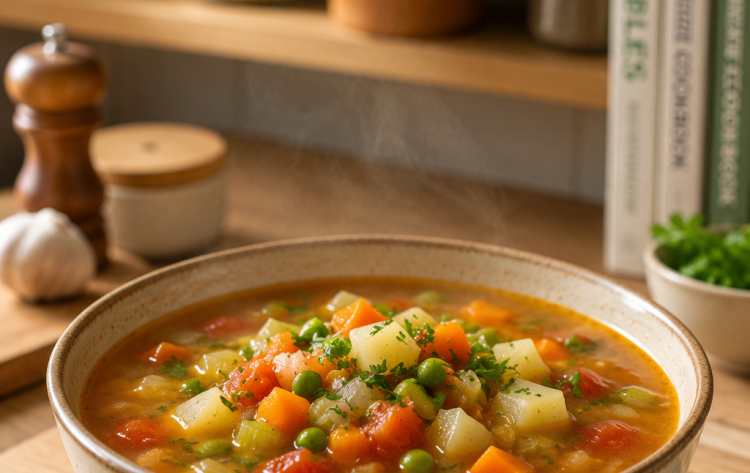
The final two minutes of cooking add a fresh contrast to the rich vegetable broth. Fresh parsley is stirred into the soup along with the juice of half a lemon. Parsley contributes a clean herbal note, while lemon juice adds brightness that can make the entire bowl taste lighter and more balanced. These ingredients are best added toward the end rather than at the beginning because their fresh qualities can become less noticeable after prolonged cooking. Stir gently so the parsley and lemon juice are evenly incorporated without breaking apart the vegetables. After approximately two minutes, turn off the heat and remove the bay leaf before serving. The result should be a warm, aromatic vegetable soup with tender vegetables, a savory broth, gentle herbs, and a subtle citrus finish. This final step helps keep the soup from tasting flat or overly heavy.
How to Serve Homemade Vegetable Soup
Serve this easy vegetable soup hot while the vegetables and broth are still warm and aromatic. The soup can stand on its own as a light meal, but it also pairs naturally with simple sides. Garlic bread can add a crisp, savory element, while toasted bread or dinner rolls provide something substantial for dipping into the broth. Crackers are another convenient option when you want a lighter accompaniment. For a more filling meal, the soup can be served alongside rice or a grilled sandwich. Because the recipe produces six to eight servings, it is also suitable for family lunches or dinners where everyone can serve themselves from one large pot. If you are preparing the soup ahead of time, gently reheat only the amount needed and avoid excessive boiling, as repeated high heat can soften the vegetables more than necessary.
Healthy Vegetable Soup for Lunch or Dinner
This recipe can fit naturally into a balanced meal because it combines a variety of vegetables in one bowl. Carrots and corn provide natural sweetness, tomatoes add acidity, cabbage and green beans contribute texture, while potatoes make the soup more substantial. Celery, zucchini, peas, and bell pepper add further variety, creating a mixture that is more interesting than a soup built around only one or two vegetables. The approximate nutritional information supplied with the original recipe lists 160–180 calories per serving, along with about 5 grams of protein, 30 grams of carbohydrates, 4 grams of fat, 7 grams of fiber, and 8 grams of sugar. These values are approximate and can vary according to ingredient brands, serving size, and preparation. For anyone looking for a simple homemade soup with plenty of vegetables, this recipe offers an approachable option.
How to Store Vegetable Soup in the Refrigerator
Proper storage makes this homemade vegetable soup convenient for meal preparation. Allow the cooked soup to cool appropriately before transferring it to an airtight container, then place it in the refrigerator. According to the provided recipe information, the soup stays fresh in the refrigerator for approximately three to four days. When reheating, warm the desired portion thoroughly and stir occasionally so the heat is distributed evenly. Avoid repeatedly reheating the entire batch because repeated heating can gradually change the texture of the vegetables. If the soup thickens slightly during refrigeration, a small amount of water can be used to loosen it while reheating, although the original recipe does not require an additional ingredient. Keeping the soup covered and refrigerated also helps preserve its flavor. For convenient lunches, divide the soup into individual portions before refrigeration so only the amount required for each meal needs to be reheated.
Freezing Homemade Vegetable Soup for Later
Vegetable soup can also be frozen when you want to prepare a larger batch in advance. The provided recipe recommends using freezer-safe containers and storing the soup for approximately two to three months. Leave suitable space in the container rather than filling it completely because liquid expands as it freezes. Once the soup has been stored properly, thaw it safely before reheating and warm it gently on the stove. Frozen vegetables may have a slightly softer texture after thawing, particularly if they were already very tender before freezing, but the broth and overall flavor can still make the soup enjoyable. Dividing the soup into smaller containers can make future meals easier because you can thaw individual portions instead of the entire batch. Proper labeling with the storage date is also a practical habit when freezing homemade meals for later use.
Simple Notes for Better Vegetable Soup
A few straightforward cooking choices can improve the final result without changing the ingredient list. Fresh vegetables are recommended because they generally provide better texture and flavor. Cutting vegetables into similar sizes helps them cook more evenly, while adding harder vegetables before softer ones prevents excessive cooking of delicate ingredients. Homemade vegetable broth can provide a richer flavor, although the recipe works with the stated broth quantity. Avoid overcooking the vegetables because the goal is to create a soup with tender pieces rather than a completely soft mixture. Fresh parsley and lemon juice should remain part of the finishing stage so their flavors stay noticeable. If you want a thicker texture, remember that the original recipe does not include a thickening ingredient; instead, one of the suggested variations is to blend part of the cooked soup. These small techniques help maintain the intended character of the recipe.
Creamy Vegetable Soup Variation
A creamy version can be created from the same cooked soup by blending half of the finished mixture and adding cream, as suggested in the original recipe. Blending only part of the soup is useful because it creates a thicker, smoother base while leaving some vegetables whole for texture. This approach gives the soup a more substantial mouthfeel without requiring every vegetable to be pureed. If preparing this variation, allow the soup to cool slightly before blending and use equipment suitable for hot liquids. The blended portion can then be combined with the remaining soup. The result is a vegetable soup that sits between a chunky homemade soup and a smooth cream-style soup. This variation can be useful when serving guests who prefer a softer texture while still keeping recognizable vegetable pieces in the bowl.
Spicy Vegetable Soup Variation
For those who enjoy stronger heat, the original recipe suggests increasing the chili element by using extra chili flakes, hot sauce, or green chilies. The base soup has a mild and flexible seasoning profile, so additional heat can be introduced without changing its fundamental character. Red chili flakes are already listed as optional in the ingredient list, meaning the recipe can remain mild for family meals and become spicier when desired. If using hot sauce or green chilies as a variation, add them gradually and taste the soup as you go. This is especially important because the strength of chili products can vary significantly. A spicy vegetable soup can be especially appealing when served hot with toasted bread or a grilled sandwich. The goal is to enhance the broth rather than overpower the natural sweetness and flavor of the vegetables.
Protein-Rich Vegetable Soup Variation
The original recipe also suggests adding chickpeas, lentils, beans, or chicken pieces when a higher-protein version is desired. These additions can turn the soup from a lighter vegetable dish into a more substantial meal. Chickpeas and beans pair naturally with vegetable broth and can add a hearty texture, while lentils can make the soup thicker as they cook. Chicken pieces provide another option for people who want a meat-based soup. Because these are variations rather than part of the original ingredient list, they should not be considered required ingredients for the main recipe. The basic vegetable soup remains complete on its own. If you choose to customize it, consider the cooking time of the added ingredient and make sure it is properly cooked before serving. This flexibility is one reason vegetable soup remains such a practical homemade meal.
Noodle Vegetable Soup Variation
Adding cooked noodles near the end of cooking is another way to make this soup more filling. The original recipe specifically suggests adding cooked noodles during the final few minutes. Using already cooked noodles helps prevent them from absorbing too much of the broth or becoming overly soft during the long simmering period. This variation works particularly well when the soup is being served as a complete lunch or dinner. The vegetables provide color and texture, while noodles add a familiar, comforting element. If you plan to store the soup, keep in mind that noodles can continue absorbing liquid while refrigerated, so the texture may change over time. For the best result, noodles can be incorporated close to serving time. The underlying vegetable broth and seasoning remain the foundation, allowing this variation to build on the original recipe rather than replacing it.
Frequently Asked Questions About Vegetable Soup
One common question is whether vegetable soup can be prepared ahead of time, and the answer is yes. The recipe is suitable for refrigeration for three to four days and can also be frozen for two to three months when stored correctly. Another question is whether every vegetable must be cut into exactly the same size. Exact uniformity is not necessary, but reasonably similar pieces help the vegetables cook at a more consistent rate. People also often ask how to prevent vegetable soup from becoming mushy. The main approach is to avoid overcooking and to add harder vegetables earlier than softer vegetables. Another useful question concerns serving options: this soup can be paired with garlic bread, toast, dinner rolls, crackers, rice, or grilled sandwiches. Finally, the recipe can be customized with the listed variations, including creamy, spicy, protein-based, and noodle versions.
What Makes This an Easy Vegetable Soup Recipe
The appeal of this recipe is its uncomplicated method. Most of the work involves washing, peeling, chopping, and measuring ingredients before cooking. Once the vegetables are prepared, the soup follows a straightforward sequence: soften onion and garlic, cook the harder vegetables, add the remaining vegetables, season, pour in broth and water, simmer, and finish with parsley and lemon juice. There are no complicated techniques or specialized cooking skills required. The total preparation and cooking time is approximately 60 minutes, including about 20 minutes of preparation and 40 minutes of cooking. That makes this recipe practical for an ordinary lunch or dinner when you have enough time to prepare vegetables but do not want an elaborate cooking project. The large yield of six to eight servings also makes it useful for family meals and planned leftovers.
Vegetable Soup Recipe
Description:
This easy vegetable soup recipe combines fresh carrots, potatoes, green beans, peas, corn, cabbage, zucchini, tomatoes, bell pepper, celery, onion, and garlic with vegetable broth and aromatic seasonings. The soup is simmered until the vegetables are tender, then finished with fresh parsley and lemon juice for a bright, flavorful taste. It is suitable for lunch, dinner, or as a comforting appetizer.
Preparation & Cooking Duration
Preparation Time: 20 minutes
Cooking Time: 40 minutes
Total Time: 60 minutes
Servings: 6–8 servings
Difficulty: Easy
Recipe Type: Healthy Soup
Cuisine: International
Ingredients
Main Vegetables
- 2 medium carrots, peeled and sliced
- 2 potatoes, peeled and cut into cubes
- 1 cup green beans, chopped
- 1 cup peas
- 1 cup corn kernels
- 1 medium onion, finely chopped
- 2 celery sticks, sliced
- 2 tomatoes, chopped
- 2 cups cabbage, shredded
- 1 bell pepper, chopped
- 3 garlic cloves, minced
- 1 zucchini, chopped
Liquids
- 8 cups vegetable broth
- 2 cups water
Seasonings
- 2 teaspoons salt
- 1 teaspoon black pepper
- 1 teaspoon paprika
- 1 teaspoon dried oregano
- 1 teaspoon Italian seasoning
- ½ teaspoon red chili flakes (optional)
Additional Ingredients
- 2 tablespoons olive oil
- 2 tablespoons fresh parsley, chopped
- 1 bay leaf
- Juice of half a lemon
Step-by-Step Instructions
1. Prepare the Vegetables
Wash all vegetables thoroughly. Peel the carrots and potatoes, then slice and cube them respectively. Chop the green beans, celery, tomatoes, bell pepper, and zucchini. Shred the cabbage, finely chop the onion, and mince the garlic. Keep the prepared vegetables ready so they can be added in the correct cooking order.
2. Heat the Olive Oil
Place a large soup pot over medium heat. Add 2 tablespoons olive oil and allow it to heat for approximately 30 seconds.
3. Cook the Onion and Garlic
Add the chopped onion and cook for 3–4 minutes, stirring occasionally, until it becomes soft and slightly transparent. Add the minced garlic and cook for another minute until fragrant.
4. Add the Hard Vegetables
Add the carrots, potatoes, and celery. Stir well and cook for approximately 5 minutes, allowing these firmer vegetables to begin softening.
5. Add the Remaining Vegetables
Add the green beans, bell pepper, corn, peas, tomatoes, cabbage, and zucchini. Stir thoroughly and cook for another 3–4 minutes.
6. Season the Vegetables
Add salt, black pepper, paprika, dried oregano, Italian seasoning, red chili flakes, and the bay leaf. Stir until the seasonings are evenly distributed.
7. Add the Broth and Water
Pour in 8 cups of vegetable broth and 2 cups of water. Stir everything together and increase the heat until the soup reaches a boil.
8. Simmer the Soup
Once boiling, reduce the heat to low and cover the pot. Simmer for 30–35 minutes, stirring occasionally, until the vegetables are tender and the broth is flavorful.
9. Add the Finishing Ingredients
Stir in the fresh parsley and juice of half a lemon. Cook for another 2 minutes, then turn off the heat. Remove the bay leaf before serving.
Serving Suggestions
Serve the vegetable soup hot with garlic bread, toasted bread, dinner rolls, crackers, rice, or grilled sandwiches. It can be served as a light main meal, a warm lunch, or an appetizer.
Storage Notes
Refrigerator: Store the soup in an airtight container for approximately 3–4 days.
Freezer: Transfer the soup to freezer-safe containers and freeze for approximately 2–3 months.
Recipe Notes
Use fresh vegetables whenever possible for the best texture and flavor. Cut the vegetables into reasonably similar pieces so they cook evenly. Add the harder vegetables before the softer vegetables and avoid prolonged cooking once they become tender. Fresh parsley and lemon juice are added at the end to preserve their fresh flavor. Homemade vegetable broth can provide a richer taste.
Optional Variations
Creamy Vegetable Soup: Blend half of the finished soup and add cream.
Spicy Vegetable Soup: Increase the heat with extra chili flakes, hot sauce, or green chilies.
Protein Vegetable Soup: Add chickpeas, lentils, beans, or chicken pieces.
Noodle Vegetable Soup: Add cooked noodles during the final few minutes of cooking.
Nutritional Information
Approximate nutrition per serving:
- Calories: 160–180
- Protein: 5g
- Carbohydrates: 30g
- Fat: 4g
- Fiber: 7g
- Sugar: 8g