 admin1
If you love bagels but want a simple homemade version with a little extra protein, these High-Protein Cottage Cheese Bagels are worth trying. They’re soft, chewy, satisfying, and surprisingly easy to make. You don’t need yeast, a long rising time, or complicated bread-making techniques. Instead, cottage cheese and oat flour come together to create a simple dough that bakes into delicious homemade bagels.
Finished with savory everything seasoning, these bagels have a golden exterior, a tender center, and plenty of flavor in every bite. They’re perfect for breakfast, brunch, a quick lunch, or an afternoon snack.
The best part? You can prepare the dough in about 15 minutes and have warm, homemade bagels ready after roughly 25–30 minutes in the oven.
Why You’ll Love These Cottage Cheese Bagels
There’s something especially satisfying about making your own bagels at home, and this recipe keeps the process wonderfully simple.
Traditional bagels usually involve yeast, kneading, proofing, boiling, and baking. This cottage cheese version skips much of that process, making it a practical option when you want homemade bread without spending hours in the kitchen.
Cottage cheese gives the dough moisture and contributes protein, while oat flour creates a hearty, slightly nutty flavor. The result isn’t exactly the same as a traditional boiled bagel, but it has its own delicious texture and flavor.
Everything seasoning adds the perfect savory finish. Its combination of sesame seeds, poppy seeds, dried garlic, dried onion, and salt makes these bagels flavorful enough to enjoy on their own.
Quick Recipe Information
- Prep Time: 15 minutes
- Bake Time: 25–30 minutes
- Oven Temperature: 190°C / 375°F
- Makes: 5 bagels
Ingredients
For five homemade cottage cheese bagels, you’ll need:
- 1 cup cottage cheese
- 1½ cups oat flour, plus a little extra if needed
- 1 teaspoon baking powder
- ¼ teaspoon salt
- 1 egg, for the dough or egg wash as preferred
- Everything bagel seasoning, for topping
You can adjust the amount of seasoning according to your taste.
If you don’t have ready-made oat flour, you can make your own by blending old-fashioned rolled oats in a high-speed blender or food processor until they resemble a fine flour.
Choosing Your Cottage Cheese
Cottage cheese is one of the key ingredients in this recipe, so its consistency can affect the dough.
A thicker cottage cheese generally creates a dough that’s easier to handle. If your cottage cheese contains a lot of liquid, you may want to drain some of the excess moisture before mixing.
You can use full-fat, reduced-fat, or low-fat cottage cheese. Keep in mind that different brands can vary in moisture content, so the amount of oat flour needed may vary slightly.
How to Make High-Protein Cottage Cheese Bagels
Step 1: Prepare the Oven
Preheat your oven to 190°C / 375°F.
Line a baking sheet with parchment paper or lightly grease it to prevent the bagels from sticking.
Preparing the baking sheet first makes it easier to transfer the shaped bagels directly onto the tray.
Step 2: Make the Dough
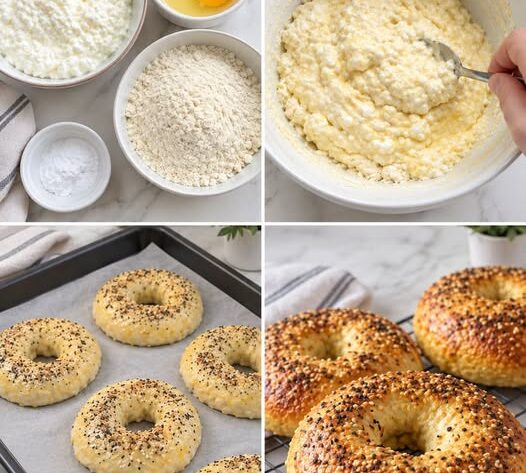
Add the cottage cheese to a mixing bowl.
If your cottage cheese has particularly large curds, you can blend or mash it first for a smoother dough.
Add the oat flour, baking powder, salt, and egg. Stir everything together until a thick dough begins to form.
The dough should be soft and workable but not extremely sticky. If it feels too wet to shape, add a little more oat flour, one tablespoon at a time.
Avoid adding too much flour at once. A dough that is excessively dry can produce dense bagels.
Step 3: Let the Dough Rest Briefly
Allow the dough to rest for a few minutes.
This gives the oat flour time to absorb some of the moisture from the cottage cheese and makes the dough easier to handle.
While the dough rests, prepare your baking sheet and make sure your oven has reached temperature.
Step 4: Divide the Dough
Divide the dough into five roughly equal portions.
Lightly flour your hands or dampen them with water if the dough is sticking.
Roll each portion into a ball, then gently flatten it slightly.
Step 5: Shape the Bagels
Use your finger to create a hole in the center of each dough ball.
Gently stretch the opening until it resembles a bagel shape.
Try not to make the hole too small because it may shrink during baking. At the same time, avoid making it excessively large because the bagel will spread as it cooks.
Place the shaped bagels on your prepared baking sheet, leaving a little space between each one.
Step 6: Add the Everything Seasoning
For a golden, flavorful finish, brush the tops lightly with beaten egg if desired.
Generously sprinkle everything bagel seasoning over each bagel.
Press the seasoning very gently into the surface so it adheres during baking.
You can use as much or as little seasoning as you like. If you’re sensitive to salty flavors, use a lighter coating because everything seasoning typically contains salt.
Step 7: Bake
Place the baking sheet in the preheated oven.
Bake for approximately 25–30 minutes, or until the bagels are golden on the outside and cooked through.
Because ovens can vary, begin checking around the 25-minute mark. The bagels should feel firm on the outside and have a lightly golden appearance.
Allow them to cool for several minutes before slicing.
Tips for Perfect Cottage Cheese Bagels
Don’t make the dough too wet. Cottage cheese varies considerably in moisture. If your dough is difficult to shape, gradually add more oat flour.
Don’t overmix. Mix just until the ingredients come together. Overworking the dough can make the finished bagels heavier.
Keep the bagel holes open. The center will naturally shrink as the bagels bake, so make the holes slightly larger than you think you need.
Use parchment paper. This makes cleanup easier and helps prevent sticking.
Watch the seasoning. Everything seasoning is flavorful and often salty, so you don’t need to use a huge amount.
Let them cool slightly. Freshly baked bagels are soft, so giving them a few minutes to cool helps the texture settle before slicing.
Delicious Ways to Serve Them
These bagels are incredibly versatile.
For a classic breakfast, slice one in half and spread it with cream cheese. Add sliced cucumber, tomato, or smoked salmon for a more substantial meal.
For a savory lunch, fill your bagel with scrambled eggs, avocado, turkey, chicken, or fresh vegetables.
You can also toast the bagel and spread it with cottage cheese, hummus, peanut butter, or your favorite spread.
For a simple snack, enjoy one warm with a little butter.
The everything seasoning makes these bagels flavorful enough that they don’t require much topping at all.
Easy Variations
Although everything seasoning is a delicious choice, you can change the flavor easily.
Try sesame seeds for a simple nutty topping, or use poppy seeds for a classic bakery-style finish.
For a savory herb version, add dried Italian herbs to the dough and top with a little grated cheese.
For a slightly sweeter breakfast bagel, skip the everything seasoning and add cinnamon to the dough. Serve with cream cheese or nut butter.
You can also add finely chopped fresh herbs, such as chives or parsley, for an extra layer of flavor.
How to Store Them
Once completely cooled, store the bagels in an airtight container at room temperature for a short period, or refrigerate them for longer storage.
For longer-term storage, wrap the cooled bagels individually and freeze them in a freezer-safe container or bag.
When you’re ready to enjoy one, thaw it and toast it until warm.
Frequently Asked Questions
Can I use homemade oat flour?
Absolutely. Simply blend rolled oats until they reach a fine, flour-like consistency. Measure the oat flour after blending.
Can I use another flour?
The recipe is designed around oat flour, so changing the flour may alter the texture and the amount of liquid needed. If substituting, you may need to adjust the quantities.
Why is my dough sticky?
The most common reason is excess moisture in the cottage cheese. Add oat flour gradually, one tablespoon at a time, until the dough becomes easier to shape.
Can I freeze these bagels?
Yes. Allow them to cool completely before freezing. Store them in an airtight freezer-safe bag or container and thaw before reheating or toasting.