 admin1
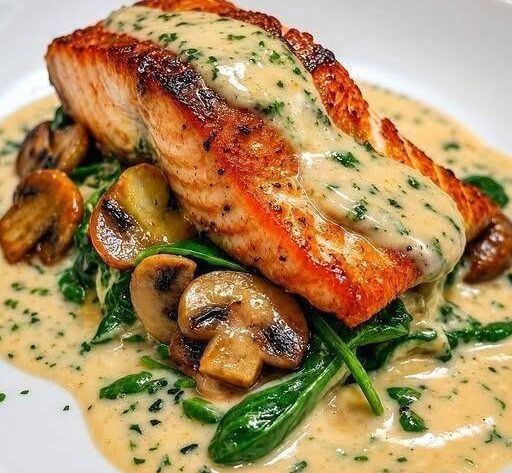
If you’re looking for a dinner that feels restaurant-worthy but is surprisingly easy to make at home, this Garlic Butter Salmon with Spinach and Mushrooms in Creamy Sauce deserves a place on your menu.
Tender salmon fillets are pan-seared until beautifully golden, then nestled into a rich, creamy sauce filled with sautéed mushrooms, fresh spinach, garlic, and buttery flavor. The result is a comforting one-pan meal that comes together without complicated techniques.
It’s the kind of recipe that works just as well for a quick weeknight dinner as it does for a special meal with family or guests. Serve it with roasted vegetables, cauliflower rice, pasta, rice, or crusty bread, depending on your preferences.
Why You’ll Love This Recipe
There are plenty of reasons this salmon recipe is destined to become a favorite.
The salmon cooks quickly, making it ideal when you don’t want to spend hours in the kitchen. The mushrooms add a delicious earthy flavor, while spinach brings color and freshness to the creamy sauce.
Garlic and butter provide the savory foundation, and the cream brings everything together into a smooth sauce that coats every bite.
Even better, the entire dish can be prepared in one large skillet. That means less cleanup after dinner and more time to enjoy your meal.
The recipe is also flexible. You can adjust the seasonings, add Parmesan for extra richness, or substitute different vegetables depending on what you have available.
Ingredients
For the salmon and sauce, you’ll need:
- 4 salmon fillets
- 2 tablespoons butter
- 1 tablespoon olive oil
- 8 ounces (225 g) mushrooms, sliced
- 3–4 cloves garlic, minced
- 2 cups fresh spinach
- 1 cup heavy cream
- ½ cup chicken or vegetable broth
- ½ teaspoon paprika
- ½ teaspoon Italian seasoning
- Salt and black pepper, to taste
- ¼ cup grated Parmesan cheese, optional
- Fresh parsley, for garnish
- Lemon wedges, for serving
Choose salmon fillets that are similar in size so they cook evenly.
If you’re using frozen salmon, thaw it safely in the refrigerator before cooking and pat the fillets dry with paper towels. Removing excess moisture helps the salmon develop a better sear.
Preparing the Salmon
Begin by patting the salmon fillets dry.
Season both sides with salt, black pepper, paprika, and Italian seasoning.
Heat a large skillet over medium-high heat. Add the olive oil and one tablespoon of butter.
Once the butter has melted and the pan is hot, carefully place the salmon into the skillet.
Cook the fillets for several minutes on the first side until they develop a golden-brown crust.
Carefully turn them over and continue cooking until the salmon is nearly cooked through.
The exact cooking time depends on the thickness of your fillets. Salmon is best judged by its internal temperature and appearance rather than relying solely on a fixed number of minutes.
Once cooked, transfer the salmon to a clean plate and set it aside.
Don’t worry if the salmon isn’t completely finished at this point. It will return to the skillet later and finish cooking gently in the sauce.
Cooking the Mushrooms
Using the same skillet, add the remaining butter.
Add the sliced mushrooms and cook over medium heat.
At first, the mushrooms will release moisture. Continue cooking until much of that moisture evaporates and the mushrooms begin to brown.
This step is important because browning gives mushrooms a deeper, richer flavor.
Once the mushrooms are golden around the edges, add the minced garlic.
Cook for about a minute, stirring frequently.
Be careful not to burn the garlic. Burnt garlic can become bitter and overpower the creamy sauce.
Creating the Creamy Sauce
Reduce the heat slightly.
Pour the broth into the skillet and gently scrape the bottom with a wooden spoon or spatula. Those browned bits left behind from the salmon and mushrooms contain plenty of flavor.
Add the heavy cream and stir gently.
Allow the sauce to simmer for a few minutes. It should begin to thicken slightly.
If you’re using Parmesan cheese, add it now and stir until melted.
Taste the sauce and adjust the seasoning with additional black pepper, salt, Italian seasoning, or garlic if needed.
Remember that Parmesan can be salty, so taste before adding additional salt.
Adding the Spinach
Once the sauce is gently simmering, add the fresh spinach.
It may look like a lot at first, but spinach wilts quickly.
Stir gently until the leaves become soft and incorporated into the sauce.
Don’t overcook the spinach. You want it tender and vibrant rather than dull and mushy.
At this stage, the skillet should contain a beautiful creamy mixture of mushrooms, spinach, garlic, and herbs.
Bringing Everything Together
Return the seared salmon fillets to the skillet.
Spoon some of the creamy sauce over each piece.
Reduce the heat to low and allow the salmon to warm through and finish cooking in the sauce.
This final step allows the flavors to come together. The salmon absorbs some of the creamy garlic and mushroom sauce while remaining tender inside.
Avoid boiling the sauce aggressively after adding the salmon. Gentle heat is enough.
Once the salmon is cooked through, remove the skillet from the heat.
Garnish with fresh parsley and serve with lemon wedges.
A small squeeze of lemon just before eating adds brightness and balances the richness of the cream and butter.
Tips for Perfect Salmon
The first important tip is to dry the salmon before seasoning it. Excess moisture can prevent proper browning.
Don’t overcrowd the skillet. If the pan is too small, cook the salmon in batches.
Avoid constantly moving the fillets while they’re searing. Give them time to develop a golden crust before turning.
Most importantly, don’t overcook the salmon. Thick fillets can remain wonderfully moist when cooked properly, while overcooked salmon can become dry.
A food thermometer is the most reliable way to check doneness, particularly if you’re cooking salmon for guests.
Easy Substitutions
You can easily adjust this recipe to suit what you have in your kitchen.
If you don’t have heavy cream, a lighter cooking cream can be used, although the sauce may not be quite as rich.
For a dairy-free version, use a suitable dairy-free cream alternative and replace the butter with olive oil or another appropriate cooking fat.
You can substitute kale for spinach, although kale will require a little more cooking time.
Not a mushroom fan? Simply leave them out and add another vegetable.
You can also add sun-dried tomatoes, roasted red peppers, zucchini, or asparagus.
For additional flavor, try a pinch of red pepper flakes or a little lemon zest.
What to Serve With Creamy Salmon
This dish pairs beautifully with a variety of sides.
For a lower-carbohydrate option, serve it with cauliflower rice, roasted broccoli, asparagus, or a simple green salad.
If you’re not concerned about carbohydrates, rice, potatoes, pasta, or crusty bread are excellent choices because they can soak up the creamy sauce.
A simple side salad dressed with lemon and olive oil can also provide a refreshing contrast to the richness of the main dish.
Storage and Reheating
If you have leftovers, allow them to cool appropriately and refrigerate them in an airtight container.
For the best texture, reheat gently rather than using extremely high heat. A skillet over low heat works well, and you can add a small splash of broth or cream if the sauce has thickened too much.
Be careful not to overheat the salmon, as reheating it aggressively can make it dry.
For food safety, keep leftovers refrigerated and consume them within an appropriate timeframe.